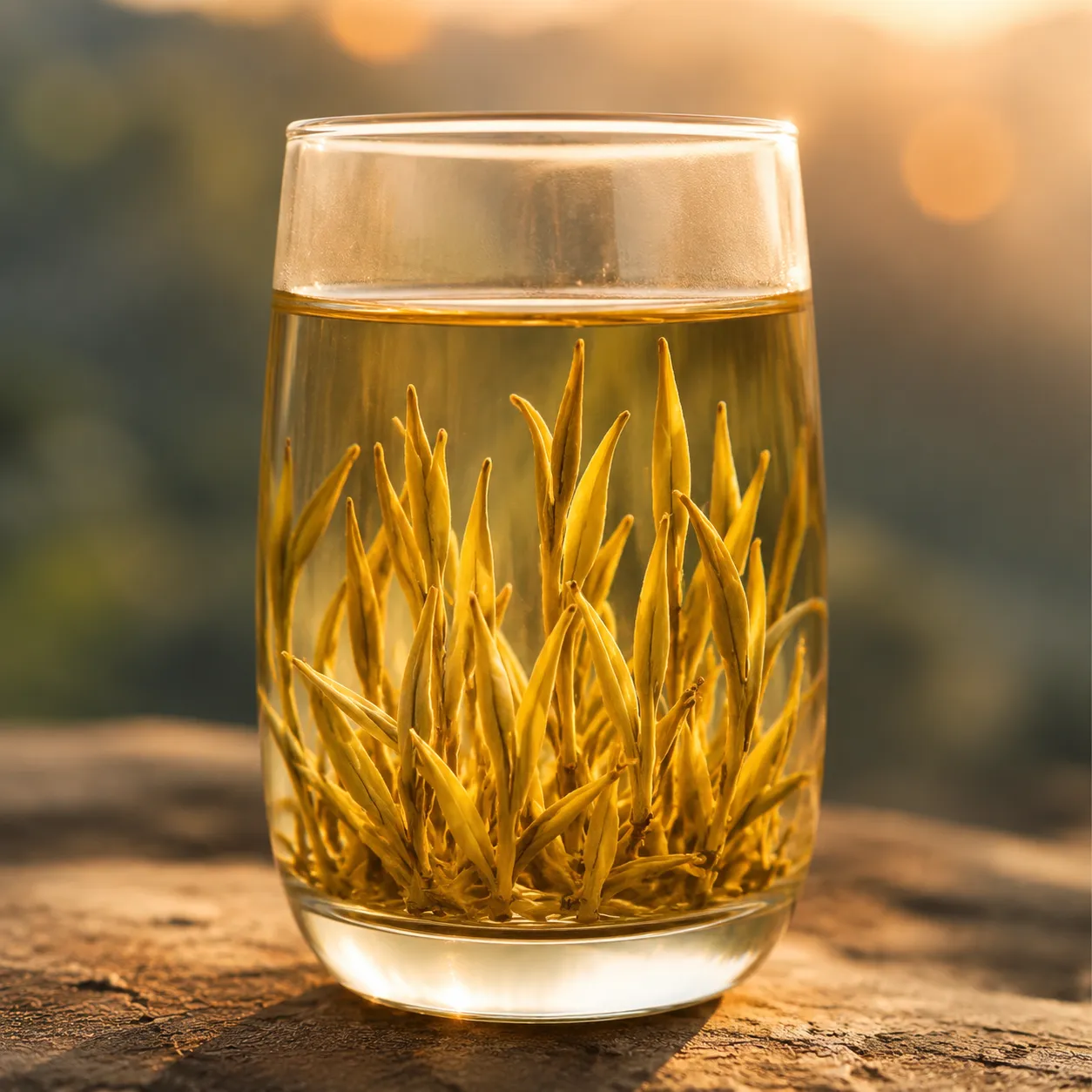
Yellow Tea 黄茶 huáng chá
The rarest category — only a handful of producers still make it. After pan-firing like green tea, leaves undergo men huan (sealing yellow): …
The Defining Process
How Yellow Tea Is Made
Sealing the yellow
焖黄 — mèn huáng — 'to seal/stew the yellow'
Yellow tea begins exactly like green tea — fixed with heat — then takes one extra step that defines the category: men huang ('sealing the yellow'). The warm, just-fixed leaves are wrapped in cloth or paper and left in small bundles. Residual heat and moisture slowly break down chlorophylls, mellow the vegetal edge, and allow minimal oxidation to develop. The result is the freshness of green tea with a softer, rounder character — less grassy, more honeyed. The category nearly vanished in the 20th century: the step is labor-intensive, the knowledge was disrupted, and many producers found it easier to sell the leaves as green tea without the extra work. This still happens — some 'yellow' teas on the market skipped the defining step entirely.
Oxidation
5-10% (lightly oxidized)
Caffeine
Low
Brew Temp
175-185°F
Typical Price
$15-80 / 100g
Straight Answers
Common Yellow Misconceptions
Most 'yellow tea' sold today skipped the men huang step and is really green tea in disguise — genuine yellow tea is genuinely rare.
Yellow tea isn't a green tea variety — the extra wrapping-and-stewing step is a real, separate category with its own softer, honeyed character.
A 'yellow tea' that tastes identical to a green tea probably never underwent the defining step — the telltale sign is the mellow, almost buttery roundness.
The one-liner: Green processing plus men huang wrapping; mellower and rounder than green, rarely made correctly anymore.
What to Taste
Best Yellow Tea Varieties to Try
Yellow tea is genuinely rare — only a handful of producers still make it correctly. If you want to experience the best yellow tea has to offer, these are the varieties to seek out:
Junshan Yinzhen (君山银针)
The most famous yellow tea in China, grown on Junshan Island in Dongting Lake, Hunan. Made exclusively from buds harvested in early spring. The buds famously stand upright in a glass during brewing — a performance that made it an imperial court favorite. Expect a mellow, honeyed sweetness with zero grassiness.
Mengding Huangya (蒙顶黄芽)
From Sichuan's Mengding Mountain, one of the earliest tea-growing regions in China. Known for its sweet, mellow character and honey-like finish. The leaves are flat and yellow-green, producing a liquor that's smoother and rounder than comparable green teas.
Huangshan Maofeng (黄山毛峰)
While primarily processed as a green tea, some producers create a yellow version with the men huang step. The result is a unique hybrid — orchid notes with the mellow roundness of yellow tea. A rare find worth seeking out.
1 Famous Yellow Teas
Our Yellow Tea Guides
Click any tea for its full page — flavor profile, exact brewing parameters, buying tips, and common scams.
Keep Exploring
The Other Five Types
Ready to Drink Better Tea?
From your first cup to your tenth infusions — everything here moves you from curiosity to a better cup.
Related Searches